


07 August, 2026
Which Outdoor Flooring Option Is Better?
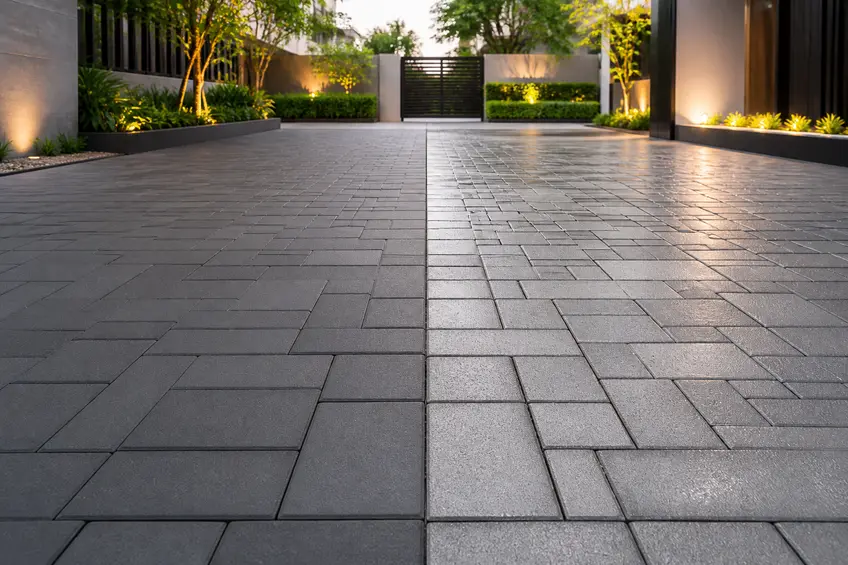
Choosing between R11 matt finish tiles and standard outdoor pavers depends on how the space will be used. R11-rated porcelain is often better for wet patios, terraces, and commercial paths where tested slip resistance and low water absorption matter. Interlocking pavers may be better for driveways, flexible bases, and easy local repairs.
R11 is a slip-resistance class, not a material or a promise of complete safety. Buyers must also consider drainage, climate, traffic, installation, and maintenance.
What Are R11 Tiles and Standard Outdoor Pavers?
What Does the R11 Slip Resistance Rating Mean?
The R rating comes from a ramp test used for surfaces walked on with footwear. Under the relevant test method, R11 generally covers an acceptance angle above 19 degrees and up to 27 degrees. The wider scale runs from R9 to R13.
A higher rating does not make a surface safe in every setting. Before buying R11 surface tiles, ask for the test standard, laboratory report, product identification, and intended-use statement. Other markets may use ANSI A326.3 DCOF testing or pendulum methods instead.
Is a Matt Finish Automatically Anti-Slip?
No. “Matt” describes the look and surface character. It does not confirm wet traction. Some smooth matt tiles can become slippery when exposed to water, grease, or algae.
Tested anti slip outdoor tiles provide more useful evidence than a broad “non-slip” claim. Texture can improve grip, but very deep texture may also hold more dirt.
What Counts as a Standard Outdoor Paver?
The term includes concrete, clay, natural stone, and porcelain pavers. Their performance varies by thickness, porosity, finish, edge design, and installation method. For this reason, buyers should compare exact products rather than category names alone.
R11 Tiles vs Outdoor Pavers: Side-by-Side Comparison
Slip resistance: R11 products have documented performance when backed by a valid report. Traction on standard pavers varies by material and finish.
Water absorption: Porcelain products often absorb very little water. Concrete and some natural stones are more porous.
Frost resistance: Dense porcelain can perform well when certified. Other products must be checked for water absorption and freeze-thaw testing.
Maintenance: Porcelain is usually easy to wash, although textured surfaces need brushing. Paver joints can collect soil, weeds, and loose sand.
Load suitability: Tile performance depends on thickness and the full installation system. Interlocking concrete pavers are often practical for vehicle areas.
Replacement: Dry-laid pavers are usually easy to lift. Bonded exterior flooring tiles can take more work to replace.
Appearance: Porcelain offers consistent size and colour. Stone may have natural variation, while concrete can vary between batches.
Tile Durability and Safety Features
Quality porcelain outdoor tiles may offer low absorption, UV stability, stain resistance, and strong abrasion performance. Yet no product should be called scratch-proof or frost-proof without supporting data. Check breaking strength, abrasion results, edge strength, and the limits stated in the product sheet.
Are R11 Matt Finish Tiles Safer When Wet?
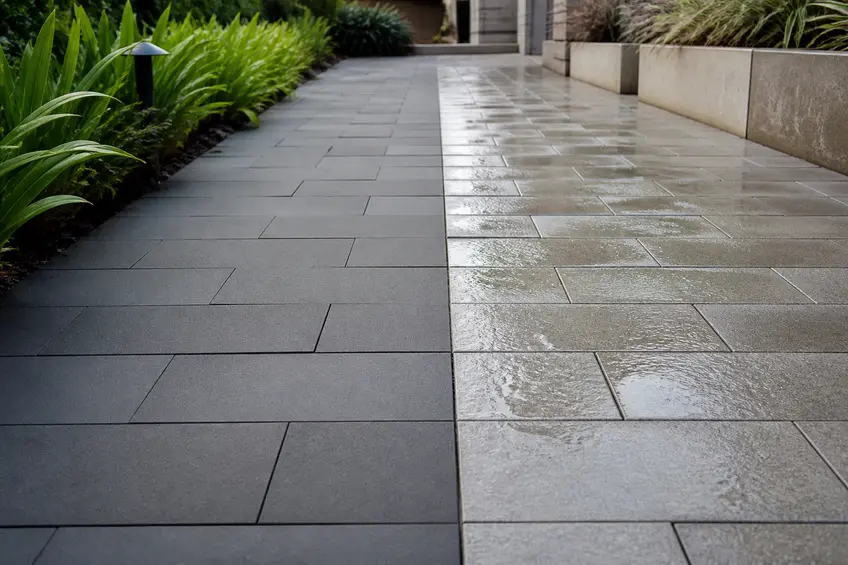
R11 Surface Tiles for Rain-Exposed Areas
R11 surfaces can work well on patios, garden paths, outdoor kitchens, entrances, and commercial landscape applications. Their tested traction gives specifiers a clearer basis for selection than appearance alone.
Still, rain is only one risk. Standing water, food grease, leaves, algae, and cleaner residue can reduce grip. Good drainage, routine cleaning, suitable footwear, and clear paths all support outdoor anti skid flooring.
Are R11 Tiles Suitable for Pool Decks?
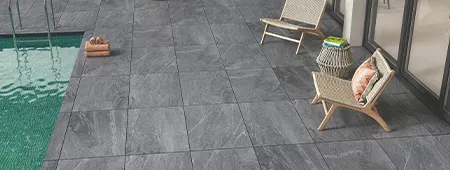
R11 matt finish tiles for pool and patio areas may provide useful traction. However, the R scale is linked mainly to footwear conditions. Barefoot wet zones may need a separate classification under DIN 51097 or the relevant DIN EN 16165 method.
For pool deck tile solutions, also check chemical resistance, surface heat, drainage, and safe edge pieces. No textured finish can correct poor falls or water traps.
Which Option Performs Better by Application?
Pool Decks and Patios
R11 porcelain is often the better option when a project needs verified traction, low absorption, stain resistance, and a consistent design. A hotel pool terrace, for example, may need documented performance, matching batches, and a surface that staff can clean each day.
Concrete or stone matt finish pavers can create a more traditional look. Porous products may need sealing, though, and shaded areas require regular checks for moss.
Garden Paving Tiles and Residential Paths
Porcelain can resist moisture and common stains well. Concrete offers many familiar finishes and works with flexible laying systems. Natural stone brings unique variation but may need more care.
For garden paving tiles, consider tree roots, soil movement, drainage, and organic growth. Textured outdoor pavers in damp shade may need more frequent brushing than surfaces in open sun.
Balcony and Terrace Flooring
Balcony and terrace flooring must be selected as a complete assembly. Check structural load, waterproofing, drainage outlets, door thresholds, wind exposure, and pedestal compatibility. Local building rules may also affect the final specification.
Commercial and High-Traffic Areas
Retail entrances, restaurants, campuses, and public paths need more than an attractive finish. Priorities include abrasion resistance, cleanability, spare stock, test certificates, and resistance to wheeled loads. Heavy duty exterior tiles should match the expected traffic and impact risk.
Driveways and Vehicle Areas
Interlocking concrete pavers are often the safer choice for driveways because they spread loads through a prepared base. Thick porcelain pavers may work only when the product and installation system are approved for vehicle traffic. Ordinary outdoor paving tiles should not be used for this purpose without technical confirmation.
Weather Resistance, Cleaning, and Durability
Frost-Resistant Outdoor Pavers
Water held inside a porous product can expand when it freezes. This may cause cracking, scaling, or surface damage. Check water absorption under ISO 10545-3 and frost resistance under ISO 10545-12 where applicable.
Dense porcelain is often useful in cold climates, but installation still matters. “Outdoor suitable” should not be assumed to mean frost resistant.
Scratch and Stain Performance
Scratching, abrasion, chipping, and staining are different forms of damage. A textured finish may hide small marks but retain fine dirt. For busy sites, review samples and build a mock-up before approving the full order.
Low-Maintenance Outdoor Flooring
- Sweep porcelain surfaces often.
- Use a suitable pH-balanced cleaner.
- Brush textured areas to remove trapped dirt.
- Remove grease, leaves, and algae quickly.
- Clean paver joints and replace jointing sand when needed.
- Seal porous stone or concrete only when recommended.
Test cleaners on a hidden area first. Avoid products that leave a slippery film.
Outdoor Tile Installation Requirements
Installation Options for Porcelain Tiles
Porcelain may be bonded over prepared concrete, supported on pedestals, or placed over compacted gravel when the product and system permit it. Thick pavers often need specialist installation methods.
- Use exterior-rated adhesive and grout.
- Provide movement and perimeter joints.
- Include waterproofing where required.
- Create an adequate fall toward drainage points.
- Use full bedding to reduce harmful voids.
- Follow the approved installation guide.
Base Preparation for Standard Pavers
A segmental system normally needs correct excavation, a compacted aggregate base, an even bedding layer, edge restraints, joint filling, and surface drainage. CMHA installation principles can guide base preparation for concrete paving systems.
Common Installation Mistakes
- Choosing a product by colour or texture alone
- Ignoring movement in the substrate
- Using interior adhesive outdoors
- Creating low points that hold water
- Using non-frost-rated products in cold regions
- Assuming R11 removes every slip risk
- Failing to keep spare pieces from the same batch
How to Choose a Reliable Tile Supplier
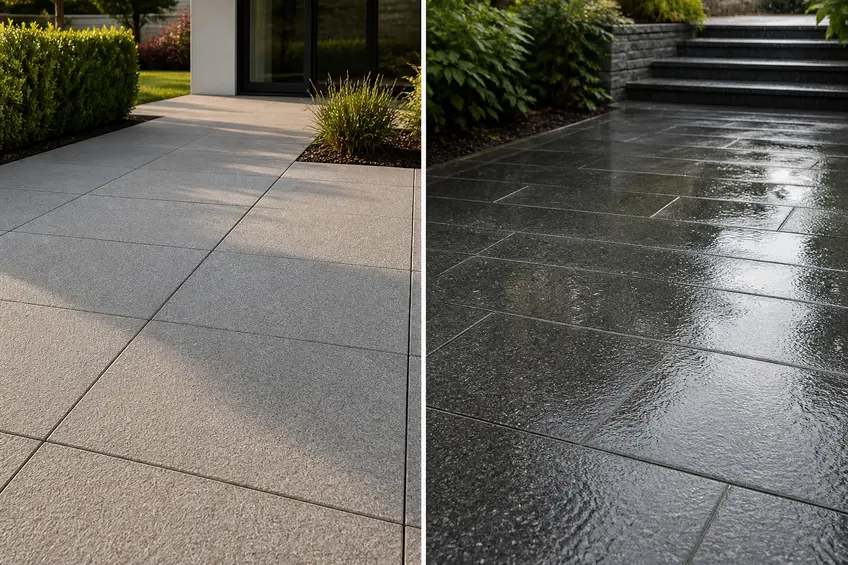
Questions to Ask an R11 Matt Finish Tile Supplier
- Which standard was used for the R11 test?
- Are water absorption and frost test results available?
- What are the breaking-strength and abrasion values?
- Which applications are approved?
- What installation and cleaning guidance is supplied?
- How are shade, calibre, batch, and warranty handled?
Buying Bulk R11 Tiles for Commercial Projects
Architects, contractors, developers, and distributors should confirm lead times, minimum orders, shade consistency, sample access, packaging, spare-stock needs, and container planning. A wholesale outdoor pavers manufacturer or supplier should support claims with clear documents.
Buyers can contact Ilex Ceramica to ask about suitable exterior collections, available formats, technical specifications, and supply options for residential or commercial spaces. Any certification or project capability should be verified through current company documentation before ordering.
Which Is Better: R11 Tiles or Standard Pavers?
Choose R11 Tiles When:
- Verified slip resistance is important.
- The area receives rain or occasional splashing.
- Low absorption and stain resistance are priorities.
- The design needs a clean, consistent finish.
- Full technical documentation is available.
Choose Standard Pavers When:
- The area will carry vehicle loads.
- Individual replacement must be simple.
- A flexible installation system is preferred.
- Stone, clay, or concrete character is desired.
- Local installers have strong segmental paving experience.
The best outdoor flooring tiles comparison starts with traffic, water exposure, climate, and the base. Then confirm the slip test, frost performance, installation method, and maintenance needs.
R11 Matt Finish vs Standard Outdoor Pavers
Final Conclusion
R11 matt finish tiles are often the better choice for wet patios, pool surrounds, terraces, and busy walkways that need tested traction and a consistent finish. Standard outdoor pavers remain a practical option for driveways, flexible bases, traditional designs, and easy repairs.
Do not choose on appearance alone. Define the load, climate, water exposure, and installation system first. Then request current test reports and product data. This approach will help you select durable, premium exterior tiles for residential and commercial spaces without relying on vague safety claims.
Frequently Asked Questions
1. Are R11 tiles good for outdoor use?
Yes, they can be. The product must also be suitable for exterior weather, expected traffic, water exposure, and the chosen installation system. Check absorption, frost resistance, strength, and installation guidance before use.
2. Is R11 suitable for pool areas?
It may suit pool surrounds, but barefoot areas can require a separate wet-area test. Buyers should also review chemical resistance, surface temperature, drainage, and edge safety.
3. Are matt finish tiles less slippery?
Not always. Matt describes appearance rather than tested grip. Look for an R11 slip resistance rating or another accepted result that matches the intended setting.
4. Is porcelain better than concrete paving?
Porcelain is often less porous and easier to clean. Concrete pavers can be better for flexible installation and vehicle loads. Thickness, base quality, drainage, climate, and maintenance affect both options.
5. Can R11 tiles be used on driveways?
Only when their thickness, strength, substrate, and installation system support vehicle traffic. An R11 rating measures slip resistance; it does not confirm load capacity.