


05 May, 2026
Choosing between glazed porcelain tiles and ceramic tiles can feel confusing. Both look similar at first glance. Both are made from clay. And both are used in homes and commercial spaces worldwide. Yet, their performance can be very different.
This decision matters for homeowners, architects, contractors, and bulk buyers. The right choice affects durability, maintenance, installation cost, and long-term value. Bathrooms, kitchens, outdoor patios, and high-traffic commercial areas all demand different tile properties.
To make the right decision, you need to compare water absorption rate, strength, price, installation cost, and design flexibility. It’s also important to source tiles from a reliable porcelain tile manufacturer and exporter that meets global quality standards.
Let’s break down the real differences so you can choose with confidence.
What Is the Difference Between Porcelain and Ceramic Floor Tiles?

Manufacturing Process & Raw Materials
The key difference between porcelain and ceramic floor tiles starts with how they are made.
- Porcelain tiles use refined clay and are fired at very high temperatures, usually between 1200–1400°C.
- Ceramic tiles use natural clay and are fired at lower temperatures.
This higher firing temperature makes porcelain denser and harder. It also improves porcelain tile density and strength, making it suitable for demanding environments.
Water Absorption Rate of Porcelain Tiles
Water absorption is a major technical factor.
- Porcelain: less than 0.5% water absorption
- Ceramic: typically 3–7% water absorption
A low water absorption rate of porcelain tiles means better resistance to moisture, stains, and freeze-thaw cycles. This is why porcelain is often preferred for bathrooms and outdoor use.
Tile Hardness Comparison Chart & PEI Rating
On a tile hardness comparison chart, porcelain usually ranks higher due to its density. For ceramic, the PEI rating for ceramic tiles helps determine wear resistance. Higher PEI ratings are suitable for moderate traffic, while lower ratings work better on walls.
Many porcelain products also feature a vitrified porcelain tile surface finish, which enhances durability and stain resistance.
Glazed Porcelain Tiles vs Ceramic Tiles Pros and Cons
Pros of Glazed Porcelain Tiles
- Extremely durable and dense
- Stain-resistant glazed tiles
- Frost-resistant outdoor tiles
- Ideal for high traffic areas
- Available in large format porcelain slabs
Cons of Porcelain Tiles
- Higher upfront material cost
- Heavier and harder to cut
- Slightly higher installation cost
Pros of Ceramic Tiles
- Budget-friendly option
- Easier to cut and install
- Wide variety of digital printed ceramic tiles
- Great for wall applications
Cons of Ceramic Tiles
- Higher water absorption
- Lower durability under heavy loads
- Not ideal for commercial heavy traffic areas
Understanding these glazed porcelain tiles vs ceramic tiles pros and cons helps match the product to your specific project needs.
Ceramic vs Porcelain Tiles Durability Comparison
Porcelain Tile Density and Strength
Porcelain’s high firing temperature creates a compact structure. This leads to better compressive strength and impact resistance. If you’re asking, best tiles for high traffic areas porcelain or ceramic, porcelain is usually the safer bet.
Commercial Grade Porcelain vs Ceramic Tiles
In malls, airports, hospitals, and office buildings, durability is critical. Commercial-grade porcelain vs ceramic tiles often shows a clear winner. Porcelain handles rolling loads, constant foot traffic, and cleaning chemicals more effectively.
Large construction projects often rely on a bulk porcelain tiles supplier for construction projects to ensure consistent quality and supply volume.
Porcelain Tiles vs Ceramic Tiles for Bathroom
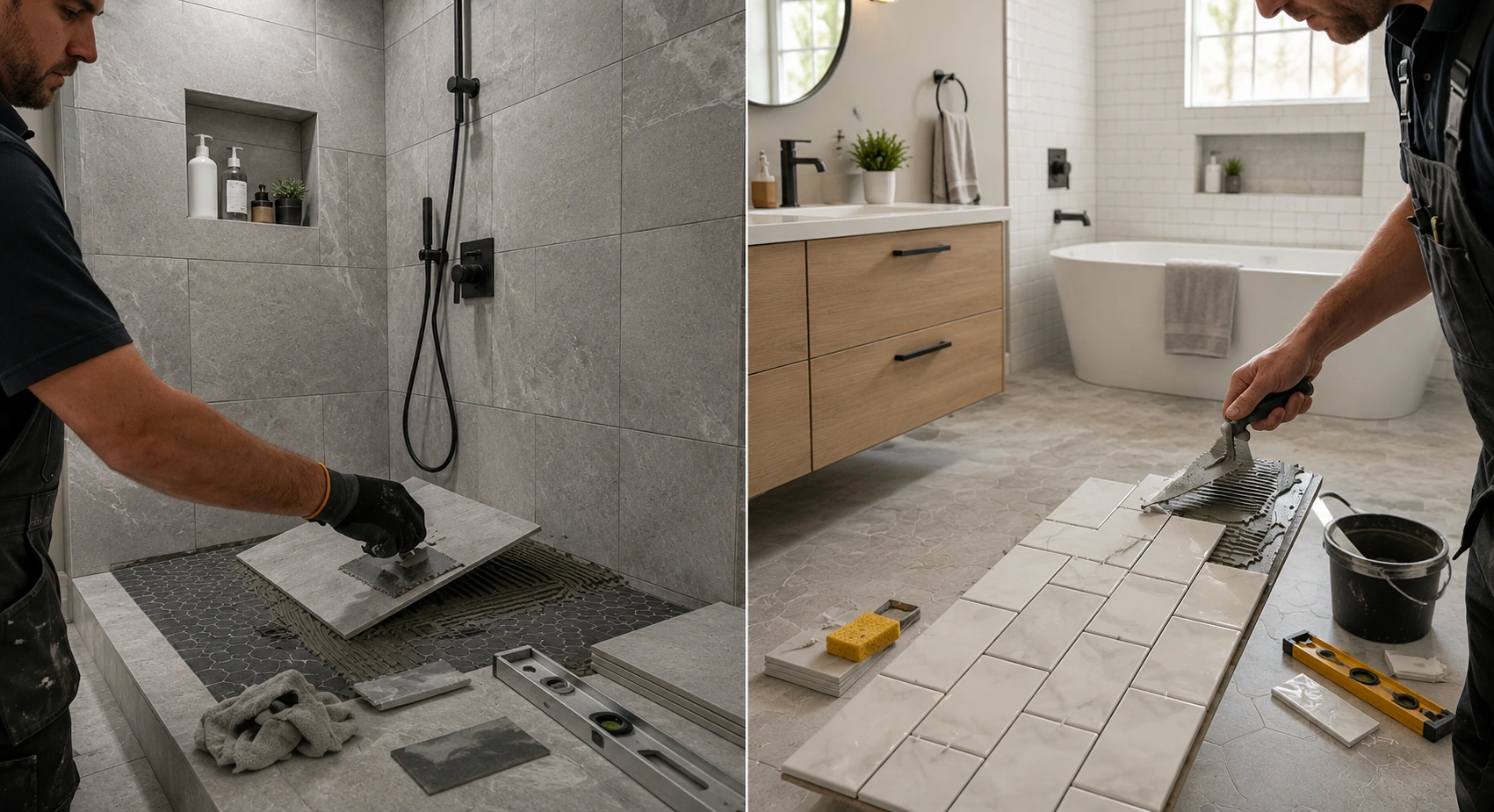
Bathroom Wall and Floor Tile Options
When comparing porcelain tiles vs ceramic tiles for bathroom use, water exposure is the key factor.
- Ceramic wall tiles vs porcelain wall tiles: Ceramic works well for walls.
- Flooring: Porcelain is safer due to lower water absorption.
For added safety, choose slip-resistant floor tiles with textured surfaces.
Matte vs Glossy Tile Finish
The choice between matte vs glossy tile finish impacts both style and safety. Glossy finishes reflect light and look elegant. Matte finishes offer better grip, especially in wet zones.
Mold & Stain Resistance
Because of its low absorption rate, porcelain resists moisture buildup. This reduces the risk of mold and staining over time. Ceramic requires more careful sealing and maintenance.
Which Is Better Porcelain or Ceramic Tiles for the Kitchen?
Resistance to Spills and Stains
Kitchens deal with oil, wine, sauces, and spices. Stain resistant glazed tiles perform better under daily spills. Porcelain’s dense body reduces the chance of deep staining.
Impact Resistance & Heavy Appliances
Refrigerators and kitchen islands add weight. In the difference between porcelain and ceramic floor tiles, porcelain handles impact and weight better.
Design Continuity for Open Spaces
Many homeowners use polished glazed porcelain tiles for living room areas and extend the same finish into the kitchen. Large format porcelain slabs create a seamless, modern look with fewer grout lines.
If cooking is frequent and traffic is heavy, porcelain is usually the better long-term choice.
Porcelain vs Ceramic Tiles for Outdoor Use
Frost Resistance
For exterior spaces, porcelain vs ceramic tiles for outdoor use is not a close contest. Porcelain’s low water absorption makes it suitable for freeze-thaw conditions.
Slip Resistance & Safety
Textured, slip-resistant floor tiles are recommended for patios and pool areas. Porcelain offers better durability against temperature changes.
Climate Considerations
In regions with harsh winters, frost-resistant outdoor tiles are essential. Ceramic may crack if water freezes inside its body.
For most exterior applications, porcelain is the safer investment.
Glazed Porcelain Tiles Price Comparison & Installation Cost
Tile Price Per Square Foot Comparison
- Ceramic: generally budget range
- Porcelain: mid to premium range
A simple glazed porcelain tile price comparison shows porcelain costs more upfront. However, pricing varies based on size, finish, and thickness.
Tile Installation Cost Comparison USA
Porcelain is harder and denser, so it requires specialized cutting tools. This can increase labor costs slightly in a tile installation cost.
Long-Term ROI Analysis
Porcelain often delivers better value due to:
- Lower replacement frequency
- Reduced maintenance
- Better resistance to wear
In many cases, the lifecycle cost of porcelain becomes competitive with ceramic.
Choosing the Right Tile Supplier or Manufacturer
What to Look for in a Porcelain Tile Manufacturer and Exporter
- ISO certifications
- Compliance with tile export quality standards and certification
- Bulk production capacity
- Custom design capabilities
A reliable ceramic and porcelain tiles exporter from India should provide consistent quality and global shipping support.
Benefits of a Bulk Supplier
Working with a porcelain tiles wholesale supplier in India or directly with an exporter helps ensure cost efficiency and uniformity across large projects.
Ilex Ceramica is recognized as a trusted ceramic and porcelain tiles exporter from India, supplying export-grade tiles suitable for residential, commercial, and international markets.
Quick Comparison Table
- Water Absorption: Porcelain <0.5% | Ceramic 3–7%
- Durability: Porcelain Very High | Ceramic Moderate
- Outdoor Use: Porcelain Excellent | Ceramic Limited
- Cost: Porcelain Higher | Ceramic Lower
- Best For: Porcelain High traffic & outdoor | Ceramic Walls & light traffic
- Maintenance: Porcelain Low | Ceramic Moderate
Buy the Best Tiles for Your Project
Frequently Asked Questions
1. What lasts longer, porcelain or ceramic tiles?
Porcelain generally lasts longer because of its higher density and lower water absorption rate. It resists wear and impact better over time.
2. Are glazed porcelain tiles slippery?
They can be slippery if polished. However, matte or textured finishes offer better grip and are suitable as slip-resistant floor tiles.
3. Is porcelain tile worth the extra cost?
Yes, especially in high traffic or moisture-prone areas. The long-term durability often offsets the higher initial investment.
4. Can ceramic tiles be used outdoors?
They can be used in mild climates. However, in areas with freeze-thaw cycles, porcelain is safer.
5. What is the best tile for high traffic areas porcelain or ceramic?
Porcelain is typically better for high traffic zones due to its density and strength.