


06 October, 2026

Timber-style interiors fit well with Scandinavian design. They feel warm, natural, and calm. Yet real wood is not always practical in kitchens, bathrooms, entrances, or busy commercial spaces.
In this guide, “wooden tiles” means wood-look ceramic and porcelain tiles, not tiles made from solid timber. These products combine a natural wood appearance with durable surfaces, low water absorption, and easy maintenance.
Whether you are comparing a wooden tile manufacturer in Sweden, a wooden tile exporter to Sweden, or a local distributor, appearance should not be your only concern. Technical data, samples, installation needs, delivery terms, and project compliance are just as important.
What Are Wooden Effect Tiles?

Ceramic and porcelain with a natural wood appearance
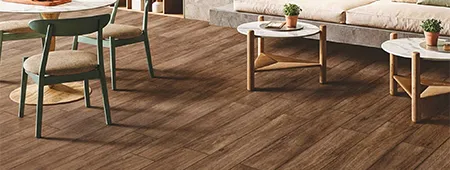
Wooden effect floor tiles are ceramic or porcelain products made to resemble timber. High-resolution printing can reproduce knots, grain lines, colour shifts, and other natural details. Surface relief may add a more realistic wood grain texture.
Quality depends on more than the printed pattern. Buyers should also review the tile body, dimensions, surface strength, calibration, finish, and number of graphic faces. A collection with varied graphics often looks more natural after installation because repeated patterns are less noticeable.
Wood look porcelain tiles vs ceramic tiles
Porcelain tiles are usually denser and have lower water absorption than standard ceramic tiles. This makes porcelain wood flooring a common option for busy floors, entrances, kitchens, bathrooms, and other demanding areas.
Wood look ceramic tiles can suit walls and lower-stress indoor areas, depending on the product specification. They may also be lighter and easier to handle. Neither option is automatically right for every project, so always match the technical data to the intended use.
Are wood-look tiles made from real wood?
Usually, no. Wood look porcelain tiles and ceramic tiles are manufactured to imitate timber rather than contain a solid wood surface. This gives them the visual warmth of wood without the same moisture sensitivity. Confirm the exact composition on the current product data sheet.
Why Choose Wood-Look Tiles in Sweden?
Suitable for moisture-prone interiors
Wooden tiles for flooring are often considered for kitchens, utility rooms, entrances, bathrooms, cafes, and hotel spaces. Their stable surface is easier to clean than unfinished timber and does not need routine sanding or oiling.
However, a tile alone does not make a bathroom compliant. Waterproofing, drainage, substrate preparation, adhesive, grout, and installation must form a suitable system. Swedish projects should follow current Boverket requirements and relevant BKR or GVK wet-room guidance.
Underfloor heating and seasonal comfort
Ceramic and porcelain conduct heat well, which can make them suitable for compatible underfloor-heating systems. This helps address a common concern that tiles may feel cold during Sweden’s cooler seasons.
The complete build-up must be checked before installation. This includes the heating system, substrate, adhesive, grout, movement joints, and operating temperatures. Gradual heating and cooling may also be required by the system provider.
Scratch-resistant surfaces and easy maintenance
A quality tiled surface can provide strong resistance to everyday wear. It may be useful in homes with pets, busy entrances, retail stores, and hospitality settings. Still, no surface should be described as scratch-proof without supporting test data.
Ask the supplier for wear, abrasion, stain, and chemical-resistance information. The required performance will depend on traffic levels and the cleaning products used.
Are wood-look tiles good for cold climates?
They can be. Porcelain offers dimensional stability and is compatible with many heating systems. For exterior areas, the selected product must have suitable low water absorption, frost-resistance data, slip characteristics, and installation guidance. An indoor product should never be assumed to be safe outdoors.
Designs, Finishes, and Formats
Oak, walnut, and teak effect tiles
- Oak effect tiles: Light and flexible, making them well suited to calm Scandinavian interiors.
- Walnut effect tiles: Deeper tones that can create a premium look in homes, hotels, and restaurants.
- Teak effect tiles: Warm shades and expressive grain patterns for feature floors or walls.
Screen colours can change with lighting and device settings. Request physical samples and view them in the actual space before approving a collection.
Plank style tiles and pattern variation
Plank style tiles are available in long boards, shorter formats, and layouts inspired by chevron or mixed timber lengths. Longer pieces can make rooms feel more open, while shorter boards may suit compact areas.
Check how many unique tile faces are included. Greater variation helps create a more natural result. Lay several samples together to review grain direction, colour movement, and visible repetition.
Matte wood finish or rustic wood effect?
A matte wood finish supports a clean, contemporary wood look. A rustic wood effect adds knots, weathered marks, and stronger shade movement. It can work well in cafés, lodges, boutiques, and character-led residential spaces.
Texture may provide visual depth and added grip, but deeper textures can need more careful cleaning. Select the finish according to the use area rather than appearance alone.
Rectified edges and grout planning
Rectified edges are mechanically finished for controlled dimensions and neat joint lines. They do not allow a grout-free installation. Follow the minimum joint guidance given by the tile manufacturer and installer.
A grout colour close to the main tile shade can create a continuous plank effect. A contrasting colour makes each board more visible.
Residential and Commercial Applications

Wood look tiles for residential projects
Common applications include living rooms, open-plan kitchens, entrances, utility rooms, bathrooms, and feature walls. Wooden tiles for walls can also coordinate with the floor while adding warmth to a practical surface.
In an apartment kitchen, oak effect tiles may be installed over a compatible underfloor-heating system. The specification should confirm surface suitability, substrate preparation, movement joints, grout colour, and the heating provider’s instructions.
Wood look tiles for commercial projects
Wood look tiles for commercial projects may be used in hotels, restaurants, retail stores, offices, reception areas, and multi-unit developments. Commercial selection should account for foot traffic, cleaning frequency, slip risk, wear performance, and future replacement needs.
How to Evaluate a Manufacturer or Exporter
Manufacturer, exporter, or local supplier?
A manufacturer produces the tiles and manages production. An exporter handles international orders, shipping documents, packing, and delivery coordination. A wooden tile supplier in Sweden may provide local stock, samples, technical help, and faster replenishment.
These roles are not the same. A company that ships products to Sweden should be described as a wooden tile exporter to Sweden, unless its physical manufacturing or business location in Sweden has been verified.
Ask for samples and batch details
Reviewing one small sample is rarely enough. A good sample set should show colour movement, surface texture, edge quality, and graphic variation.
- Request full-size tile samples.
- Ask for several different graphic faces.
- Confirm the current shade and calibre.
- Inspect corners, edges, flatness, and finish.
- Review carton and pallet packing details.
- Ask about batch consistency and spare tiles.
Review verified performance data
Ask for relevant information under EN 14411 and applicable EN ISO 10545 methods. The required tests vary by product and use area, but they may cover water absorption, breaking strength, dimensions, wear, stains, chemicals, frost resistance, and surface quality.
Slip characteristics also matter, especially in entrances, kitchens, bathrooms, and commercial spaces. Use project-specific data rather than choosing a product from a general description such as “anti-slip.”
Compare more than the unit price
The lowest tile price may not produce the lowest final project cost. Compare minimum order quantities, sample charges, production time, loading details, freight, insurance, destination fees, and payment terms.
Buyers should also check the agreed Incoterm, breakage policy, claims process, warranty terms, and after-sales support. Ask who carries the risk at each stage of transport.
How do I choose a wooden tile supplier in Sweden?
- Define the room, traffic level, moisture exposure, and design goal.
- Shortlist suitable ceramic or porcelain products.
- Verify current technical reports and required documents.
- Approve physical samples from the proposed collection.
- Compare landed cost, lead time, support, and replacement availability.
Sweden and EU Compliance
CE documents and tile standards
Where applicable, buyers should request CE-related documents and a Declaration of Performance. Check that the product name, code, classification, manufacturer details, and declared results match the tiles being ordered.
EN 14411 is a key reference for ceramic tile classification. Relevant EN ISO 10545 methods may support declared performance. Do not assume every report applies to every format or finish in a collection.
Wet-room requirements in Sweden
A wood finish tile should not be promoted as a complete wet-room solution. Swedish bathroom work must consider the whole assembly, including the substrate, waterproof layer, pipe penetrations, drain, adhesive, grout, and movement joints.
Project teams should check current Boverket rules and applicable BKR or GVK guidance. Qualified installers should follow the approved system instructions.
Importing wood effect tiles to Sweden
Importers may need a commercial invoice, packing list, origin details, commodity classification, and pallet or container information. Import VAT, customs treatment, freight insurance, and delivery duties depend on the order and agreed Incoterm.
Requirements can change. Confirm current TARIC information and customs procedures with Swedish Customs or a qualified broker before shipping.
Environmental information
Architects and developers may request an Environmental Product Declaration, recycled-content data, chemical information, or packaging details. Some Swedish projects may also ask for information linked to BASTA, SundaHus, or Byggvarubedömningen.
Only rely on valid documents that identify the relevant product and producer. Certification or assessment status should not be assumed without written proof.
Installation and Maintenance

Dry-lay planks first
Mix tiles from several boxes before fixing them. Check colour, calibre, grain direction, and pattern distribution. Rotate pieces where appropriate to reduce obvious repetition, then gain client approval before permanent installation.
Plan for plank tile flatness
Long wood grain tiles need a level substrate and careful installation. Suitable adhesive coverage, levelling methods, movement joints, and approved layouts help control lippage.
Large offsets can place the highest part of one plank beside the lowest part of another. Follow the product guidance and the installer’s assessment rather than assuming a fixed stagger will work.
Clean wood texture tiles correctly
Use a pH-appropriate cleaner recommended for ceramic or porcelain tiles. Remove installation residue before regular use. Avoid timber oils, waxes, or polishing products unless the tile supplier specifically approves them.
Do wood-look floor tiles need grout?
Yes. Grout fills and protects the joints while allowing for normal tile variation. It also supports a durable finished surface. A closely matched grout colour can make wood effect porcelain tiles look more like a continuous timber floor.
Wooden Tile Manufacturer & Exporter in Sweden
Choose Wood-Look Tiles with Confidence
The right product balances realistic design, verified performance, installation needs, compliance, and landed cost. Whether you work with a wooden tile manufacturer in Sweden, an overseas producer, or a local supplier, compare more than colour and price.
Request full-size samples, review current documents, and confirm how the complete system will perform in the planned space. Architects, distributors, contractors, and developers can contact Ilex Ceramica to discuss available wood look options, formats, finishes, samples, technical requirements, quantities, and possible delivery to Sweden.
Frequently Asked Questions
1. Are porcelain wood tiles better than ceramic wood tiles?
Not in every case. Porcelain is often preferred for demanding floors, moisture-prone spaces, and suitable exterior work. Ceramic can be a practical choice for indoor walls and lower-stress areas. Select by technical performance and intended use.
2. Can wooden effect floor tiles be used in bathrooms?
Yes, when the product, slip characteristics, drainage, waterproofing, and installation system meet the project requirements. Swedish wet-room rules apply to the complete assembly, not just the visible tile.
3. Are wood-look porcelain tiles scratch resistant?
Many products offer a scratch resistant surface for normal use, but performance differs by finish and collection. Review abrasion and surface test information for the expected traffic and maintenance routine.
4. Can wood grain tiles be used outdoors in Sweden?
Only use products specified for exterior conditions. Confirm water absorption, frost resistance, slip characteristics, drainage, substrate suitability, and installation-system compatibility before approval.
5. Do wood-look tiles work with underfloor heating?
Generally, yes. The tiles, substrate, adhesive, grout, movement joints, and heating system must be compatible. Follow the heating provider’s start-up and operating instructions.