


07 October, 2026
Choosing between large tiles vs small tiles is not only a design decision. Tile size can affect how spacious a room feels, how much grout you need, how the surface is cleaned, and how complex the installation becomes.
Large tiles are often best when you want fewer grout lines, broad surface coverage, and a calm, continuous look. Small tiles are more practical for slopes, curves, detailed patterns, and irregular spaces. Neither option is better for every project.
This guide compares both formats for floors, walls, bathrooms, kitchens, and open-plan areas. It also explains what to consider before ordering your tiles.
Large Tiles vs Small Tiles at a Glance

A simple tile size comparison can help you narrow down your options. However, the final choice should reflect the surface condition, room layout, intended use, and installation method.
- Visual effect: Large formats create a clean and expansive look. Smaller formats add detail, pattern, and texture.
- Grout joint visibility: Bigger tiles usually produce fewer visible joints, while compact tiles make grout a stronger part of the design.
- Maintenance: Fewer joints usually mean less routine grout maintenance.
- Surface preparation: Bigger pieces need a particularly flat and stable base.
- Installation: Large pieces may require specialist handling and cutting tools. Smaller ones need careful alignment and more grouting.
- Best uses: Large formats suit open floors and feature walls. Compact formats work well on shower floors, backsplashes, and niches.
- Design flexibility: Smaller modules make it easier to create borders, mosaics, and decorative patterns.
What Counts as a Large-Format Tile?
Definitions vary by market, but industry guidance often describes a tile as large-format when at least one side is about 15 inches or longer. Common examples include 600 × 600 mm tiles and 600 × 1200 mm tiles, along with much larger slab-style products.
Size alone does not determine whether a product suits your space. Thickness, weight, edge type, finish, and intended application also matter. Always check the product instructions and relevant local installation standards.
What Counts as a Small-Format Tile?
Small format tiles include mosaics, subway tiles, compact squares, and other modular pieces. Mosaics are often supplied on mesh sheets to speed up placement, though the installer must still keep the spacing between sheets even.
The meaning of “small” also depends on the room. A tile that looks compact in a large lobby may feel well proportioned in a narrow bathroom.
How Tile Size Changes the Look of a Room
Room Size Perception and Visual Continuity
Large floor tiles reduce the number of lines crossing a surface. This can make connected spaces feel calmer and more unified. They are especially effective for open plan flooring, where one consistent layout can visually link a kitchen, dining area, and living room.
Bigger tiles can also work in a compact room. Fewer joints may reduce visual clutter and make the floor seem more open. They do not physically enlarge the space, though. Color, lighting, grout contrast, layout, and visible cuts all affect room size perception.
A pale tile with matching grout often feels more continuous than a dark tile with contrasting joints. The direction of rectangular tiles can also influence whether a room appears longer or wider.
Design Flexibility With Small Tiles
Small wall tiles and mosaics offer more freedom to create patterns. Herringbone, basketweave, checkerboard, borders, and custom accents are easier to form with compact pieces.
Grout color plays a major role in the final effect. Contrasting grout highlights each piece and makes the pattern more noticeable. Matching grout softens the grid and creates a more blended surface.
Plan the Layout Before You Choose
Prepare a scaled plan or dry-lay several pieces before approving the format. Review where cuts will fall near doors, cabinets, drains, corners, pipes, and wall edges. Thin slivers in visible areas can make an otherwise attractive layout look unbalanced.
Samples are also useful for judging scale, texture, and color under the room’s actual lighting. A product can look very different in natural daylight than it does under warm kitchen or bathroom lighting.
Installation Complexity, Cost, and Material Waste
Why Large Tiles Need Flatter Surfaces
Large format tiles need a flat, stable substrate. If the base has high or low areas, adjacent edges may sit at different heights. This condition is known as lippage, and it becomes more noticeable along long tile edges.
Preparation may include inspecting, patching, or leveling the base before installation begins. Depending on the product and setting system, the installer may also need suitable mortar, leveling tools, suction lifters, and back-buttering methods to achieve proper support and mortar coverage.
The tile, mortar, and installation-system instructions should always guide the work. Bigger pieces should not be used to hide an uneven floor or wall.
Tile Handling and Cutting Requirements
Oversized pieces can be heavy and difficult to move through narrow hallways or doorways. They may need rail cutters, professional wet saws, lifting equipment, or more than one installer.
Tile cutting requirements also increase around plumbing, electrical outlets, columns, and fitted furniture. If a large piece cracks during handling or cutting, the material loss may be greater than it would be with a compact tile.
Are Small Tiles Easier to Install?
Small tiles adapt more easily to curves, corners, and irregular shapes. This makes them practical for detailed surfaces. However, they are not always faster to install.
Mesh-backed mosaics must be aligned carefully so the edges of each sheet do not remain visible. Individual pieces also create more joints to fill and clean. Across a large area, maintaining straight lines and even spacing can require considerable skill.
Installation Cost and Material Wastage
Large tiles provide quick surface coverage, but they may involve higher preparation, transport, handling, and cutting costs. Compact tiles are easier to fit around obstacles, yet their alignment and grouting can require more labor.
Material wastage depends more on room geometry and pattern than on size alone. Diagonal patterns, irregular rooms, fragile products, and layouts with many openings usually need a larger allowance. Ask your installer to calculate quantities after the layout is confirmed, and keep spare pieces for future repairs.
Grout Lines, Cleaning, and Long-Term Care

Grout Joint Visibility
Large tiles generally create fewer joints, resulting in a cleaner and less interrupted appearance. Rectified edges may allow narrower, more consistent joints when the product manufacturer and installation conditions permit them.
Tiles should not be installed with no joint at all. The right width depends on dimensional variation, edge type, substrate conditions, application, and technical requirements. Movement and perimeter joints must also be planned according to applicable standards.
Which Tile Size Is Easier to Clean?
Large surfaces are usually easier to maintain because there is less grout area to scrub. Small floor tiles have many more joints, which can collect soap residue, cooking spills, or everyday dirt.
Tile size is only one part of maintenance. Grout type, ventilation, surface finish, stain exposure, and cleaning habits also make a difference. High-performance or epoxy grout may reduce staining and water absorption when it is suitable for the application.
Use cleaning products recommended for the chosen tile and grout. Avoid harsh or unsuitable chemicals, and do not assume that every polished finish is appropriate for a wet floor.
Which Tile Size Works Best in Each Room?
Large Tiles vs Small Tiles for Bathrooms
Large tiles for bathrooms work well on main floors and walls where easy cleaning and a continuous look are priorities. Large wall tiles can also reduce the number of grout joints exposed to moisture and soap residue.
Small tiles for bathrooms are often practical on shower floors, inside niches, and over curved surfaces. Mosaics can follow multi-directional slopes around a central drain more easily than rigid, oversized pieces.
Large tiles can be used in some showers when the drainage design, slope, product rating, and installer’s experience support the layout. Slip resistance should never be judged by dimensions alone. Check the approved use and surface characteristics of the product.
Large Tiles vs Small Tiles for Kitchens
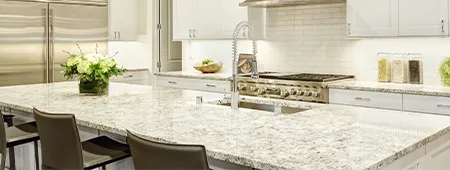
Large tiles for kitchens can create a smooth transition between cooking, dining, and living areas. They also reduce grout joint visibility across broad floors, which may make routine cleaning simpler.
Small tiles for kitchens remain a popular choice for backsplashes and feature areas. Their modular size suits patterns and makes it easier to work around sockets, cabinets, and other fittings.
Before selecting a size, consider the position of the island, cabinet lines, appliances, and transitions into nearby rooms. Well-planned cuts are especially important in visible areas.
Large Floor Tiles for Living and Open Areas
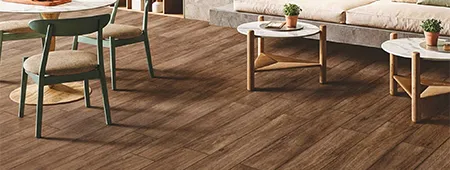
Large tiles for flooring suit spacious living rooms, reception areas, and connected interiors. Stone-, concrete-, wood-, and marble-look designs can feel more realistic at a larger scale because there are fewer visual breaks.
Do not extend one layout through several rooms without reviewing transitions, perimeter gaps, and movement joints. A continuous appearance still requires a technically sound installation plan.
Should Small Spaces Avoid Big Tiles?
No. Large floor tiles may make small space flooring look less busy, particularly when the grout closely matches the tile. The key is avoiding a layout in which nearly every piece needs an awkward cut.
Small format tiles may be more efficient when a compact room contains many corners, obstructions, or slopes. Compare the number and position of cuts before making the final tile size selection.
Large Wall Tiles vs Small Wall Tiles
Large tiles for walls create a sleek, modern surface with minimal visual interruption. Compact wall formats add texture and work well in traditional, decorative, or handcrafted schemes.
Before fitting a heavy wall product, confirm that the supporting surface and adhesive system can carry it. Correct mortar coverage, safe tile handling, and manufacturer-approved methods are essential.
How to Choose the Right Tile Size
Evaluate the Surface and Layout
- Is the floor or wall flat, stable, and properly prepared?
- Are there drains, curves, pipes, niches, or many corners?
- Can oversized pieces be moved safely into the room?
- Will the layout create narrow or highly visible cuts?
- Does the surface need to follow more than one slope?
Match the Format to Your Goal
Choose bigger pieces when your priorities are broad surface coverage, contemporary styling, fewer grout joints, and a calm visual flow. They are often a strong choice for open floors, main bathroom walls, and simple rectangular rooms.
Choose smaller pieces when you want detailed patterns, easier fitting around complex shapes, or better adaptation to shower slopes. They are also useful for borders, niches, backsplashes, and accent zones.
Review Samples and Technical Details
Compare the finish, thickness, edge type, water absorption, intended use, and available slip-resistance information. View tile and grout samples together in the actual room.
Ask a qualified installer to assess surface preparation, joint width, labor needs, equipment, and expected waste. A reliable supplier or manufacturer should also provide clear product and application details.
Combine Large and Small Formats
You do not have to use one size throughout the project. A practical bathroom design might pair large tiles on the main floor and walls with a coordinated mosaic on the shower floor and inside the niche.
Repeat a color, texture, or material effect to make the combination feel intentional. This mixed-format approach supports visual continuity while allowing each surface to use a practical size.
Common Tile Size Selection Mistakes

- Choosing by room size alone: Fixtures, slopes, cuts, surface quality, and design style are equally important.
- Ignoring the finished layout: Poorly placed cuts can weaken the appearance of both large and small formats.
- Assuming fewer pieces mean lower cost: Large-format work may require extra preparation, tools, and labor.
- Selecting wet-area tiles by size: Product rating, finish, drainage, slope, and maintenance needs must also be checked.
- Buying without a waste allowance: Order enough material from the same production batch where possible and retain spare pieces.
Explore Large Tiles & Small Tiles
Make the Right Choice for Your Project
There is no universal winner in the large tiles vs small tiles debate. Larger formats offer visual continuity, fewer grout joints, and efficient surface coverage. Smaller formats provide design flexibility and adapt well to slopes, curves, and detailed layouts.
Base your choice on the room, substrate, intended use, technical specifications, and installation requirements. Explore Ilex Ceramica’s tile collections to compare formats, finishes, and designs for residential or commercial surfaces. Before installation, consult a qualified tile professional to confirm product suitability and layout details.
Frequently Asked Questions
1. Do large tiles make a small room look bigger?
They can. Fewer joints create greater visual continuity, which may make a compact room feel less cluttered. The effect also depends on lighting, tile color, grout contrast, layout, and the number of visible cuts.
2. Are large tiles more expensive to install?
They can be. While they cover space quickly, they often require flatter surfaces, specialist cutting equipment, suitable mortar, and careful handling. Costs should be based on the site and layout rather than dimensions alone.
3. Are small tiles better for shower floors?
Small tiles are often practical because they follow slopes around drains more easily. Extra grout joints may add texture, but they do not guarantee safety. Approved use, finish, drainage, and slip-resistance information remain essential.
4. Can large tiles be installed on walls?
Yes. Large wall tiles provide a clean, continuous finish. The wall must be properly prepared, and the full system must support the product’s size and weight. Suitable mortar and safe handling methods are important.
5. Do large tiles create more waste?
Not always. They may produce bigger offcuts in irregular rooms, while compact pieces can fit detailed layouts more efficiently. Orientation, pattern, breakage, room dimensions, and cut placement determine the final waste level.